

How to Choose a Diamond Ring That Fits Your Style, Budget, and Daily Life
Key Takeaways
- Choose a ring for real-life wear, not only for its appearance in a display case.
- Compare cut, color, clarity, and carat weight as a group instead of chasing the highest grade in every category.
- Consider setting height, stone security, comfort, and wedding-band fit before making a final choice.
- Set a budget that includes the setting, insurance, appraisal, resizing, and future maintenance.
- Use current styles as inspiration, but prioritize a design that suits the wearer for the long term.
A diamond ring should feel meaningful, comfortable, and practical enough to wear for years. Whether you are shopping for an engagement ring, a milestone piece, or coordinating it with Masina men’s white gold bands, the best choice reflects the wearer’s routine as much as their personal style.
Begin with the big picture rather than a single specification. The stone, setting, metal, band shape, maintenance needs, and budget all work together to determine how a ring looks and feels in everyday life. A thoughtful comparison also helps prevent a common problem: choosing a ring that photographs beautifully but does not suit the way it will actually be worn.
1. Why Real Life Should Guide the Choice
A ring may look excellent under showroom lighting but still be frustrating if it catches on clothing, presses against nearby fingers, or feels too delicate for the wearer’s normal routine. Think about work duties, exercise, travel, cooking, pets, children, gloves, and how often the ring will be worn.
Active wearers may prefer a lower-profile setting that keeps the center stone closer to the finger. A larger diamond can be beautiful, but comfort and secure construction often matter more than maximizing carat weight. It can also be helpful to try on rings with a similar band width and setting height, since those details can feel very different once the ring is worn for several minutes rather than viewed briefly.
2. How to Set a Comfortable Budget
There is no universal rule for what a diamond ring should cost. Set a spending limit that supports your financial priorities, then divide it among the center stone, setting, taxes, and after-purchase services. Leaving some flexibility can make it easier to choose a better-balanced combination instead of feeling pressured to compromise on every other feature for one headline specification.
- Choose a total amount that does not create unnecessary debt or strain.
- Decide which feature matters most, such as visual size, sparkle, metal, or a distinctive setting.
- Reserve funds for resizing, appraisal, insurance, and routine inspections.
- Compare several stone-and-setting combinations before focusing on one option.
3. The Diamond Basics to Compare
The 4Cs are cut, color, clarity, and carat weight. Cut refers to proportions and facet arrangement, which influence brightness, fire, and sparkle. Color describes the presence or absence of body color, clarity addresses inclusions and blemishes, and carat measures weight rather than exact visible size.
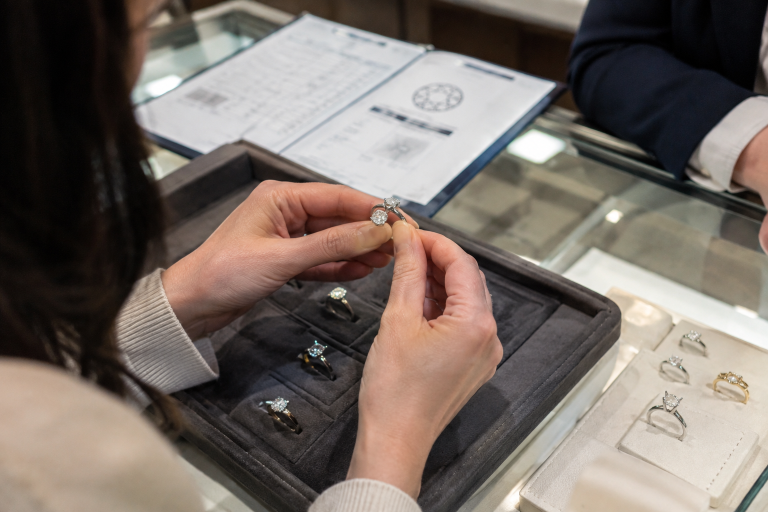
Reviewing a diamond-buying checklist can help shoppers understand grading reports, view stones in different lighting, and ask useful questions. Two diamonds with similar grades can still look different, so view the actual stone whenever possible. If viewing in person is not practical, request clear photographs or video and ask whether the stone is shown at normal viewing distance as well as under magnification.
- Cut: Prioritize lively light performance and balanced proportions.
- Color: Consider how the diamond looks beside white, yellow, or rose metal.
- Clarity: Focus on whether inclusions are noticeable without magnification.
- Carat weight: Compare face-up spread, not weight alone.
- Grading report: Ask for independent documentation for the diamond.
4. How to Choose a Diamond Shape
Shape describes a diamond’s outline, while cut describes its proportions and interaction with light. Round diamonds offer a traditional appearance and strong brilliance. Ovals, pears, and marquise diamonds create an elongated silhouette, while cushions provide softened corners and a romantic look.
Emerald cuts show broad, mirror-like flashes and can make clarity characteristics easier to notice. Princess and radiant cuts bring crisp geometry, but pointed corners need protective setting design. Choose the outline that feels most natural to the wearer instead of selecting solely by popularity. Finger coverage, symmetry, and the preferred direction of the stone can all affect the final visual impression.
5. Ring Settings for Different Lifestyles
The setting affects a ring’s height, security, cleaning needs, and overall character. A solitaire keeps the focus on one center stone, while a halo or pavé setting adds smaller diamonds and additional sparkle. Three-stone rings create a wider presentation, and bezel settings surround more of the stone with metal.
For a hands-on routine, a low basket or bezel can reduce snagging. Cathedral settings raise the center stone and may leave more room for a wedding band, but they can sit higher on the finger. Prongs and small side stones should be checked periodically for wear or looseness. Ask how many prongs secure the center stone and whether the design allows the ring to be cleaned easily at home or by a professional.
6. Choosing Metal and Band Details
Platinum, yellow gold, white gold, and rose gold each create a different visual effect. White metals can emphasize a bright, cool appearance, while yellow and rose gold offer warmer contrast. Consider skin sensitivity, existing jewelry, upkeep preferences, and how the metal complements the diamond.
Also review the band width, polished or textured finish, engraving, and whether a wedding band can sit flush beside the engagement ring. A very narrow band may feel delicate, while a wider band can create a bolder, more substantial profile. Trying on a few widths is useful because the same width can appear more or less prominent depending on finger size and the scale of the center stone.
7. Daily Wear and Ring Care
Diamonds are durable, but they can chip from impact, and settings can loosen over time. Remove a ring before heavy lifting, contact sports, swimming, cleaning with harsh chemicals, or tasks involving abrasive surfaces. Store it separately in a soft-lined compartment to limit contact with other jewelry.
Clean the ring as recommended by the jeweler, and arrange a professional inspection if it catches on fabric, feels loose, or loses a side stone. Confirm insurance terms after purchase, especially what the policy covers for loss, theft, damage, or repair. Keeping copies of the receipt, appraisal, grading report, and clear photographs can also make future insurance or service conversations easier.
8. Questions to Ask Before Buying
- Does the diamond include an independent grading report?
- Can I see it in more than one lighting environment?
- How high does the setting sit above the finger?
- Will a wedding band fit beside this design?
- What does the warranty cover?
- What are the resizing, return, repair, and inspection policies?
- How should the ring be cleaned and stored?
- Can the setting be adjusted or repaired if the wearer’s needs change over time?
9. Common Buying Mistakes to Avoid
Avoid choosing by carat weight alone, overlooking comfort, or assuming matching grades guarantee identical appearance. Do not skip paperwork, ignore future wedding-band fit, or spend the entire budget on the center stone without considering the setting and ongoing care. It is also wise not to rush past return and resizing policies, particularly when buying online or selecting a ring as a surprise.
10. Frequently Asked Questions
- What should matter most when choosing a diamond ring?
Focus on the balance of visual appeal, comfort, secure construction, personal style, and a budget that feels manageable. The right priorities differ from one wearer to another. A ring that fits the wearer’s daily habits is more likely to remain enjoyable long after the initial purchase.
- Is a larger diamond always better?
No. A well-cut diamond with attractive proportions and an appropriate setting may be more appealing than a larger stone that looks dull, sits too high, or feels impractical.
- Which setting is best for everyday wear?
Lower, secure settings often work well for active routines, but the best option depends on work, hobbies, comfort preferences, and willingness to maintain the ring. Bezel and low-profile prong designs are often worth comparing for wearers who use their hands frequently.
- Are 2026 jewelry trends worth following?
Trends can offer useful ideas, but they should not outweigh personal taste or wearability. Readers who want to explore broader diamond jewelry news and trend coverage can use it as inspiration while keeping the final decision personal.
Choose for the Years Ahead
The right diamond ring balances beauty with real-world comfort, craftsmanship, budget, and care. Take time to compare stones, settings, and metals in person when possible. A thoughtful choice will feel just as appropriate during an ordinary day as it does during a major celebration. When the final design reflects both the occasion and the wearer’s everyday life, it can remain a meaningful part of their jewelry collection for many years.
AD